
I can hardly believe it’s been two years since my Kilimanjaro trip – it still comes up in conversations with people I haven’t seen for a while, and while the trek is a distant memory, the views, smells and feels of Tanzania are very much alive with me.
I have always been fond of Africa (might be something to do with my zodiac sign) and this trip took me to a new area of the continent, having previously seen the North and West. Tanzania only reinforced that affinity.
The people – for the little that they have (many haven’t ever travelled outside of the country’s borders) – are hugely positive, friendly and caring.
Maybe I would be too if I was surrounded by the lush greenery and beautiful animals roaming around or swinging between the trees.
None of this really surprised me, but one thing did – the Tanzanian coffee.
If you have been following me for a while, you may recall I had mentioned not being a fan of African coffees because of their inherent taste profile: fruity and floral, making them more acidic – and therefore not aligned with my preference for smoky, nutty flavours.
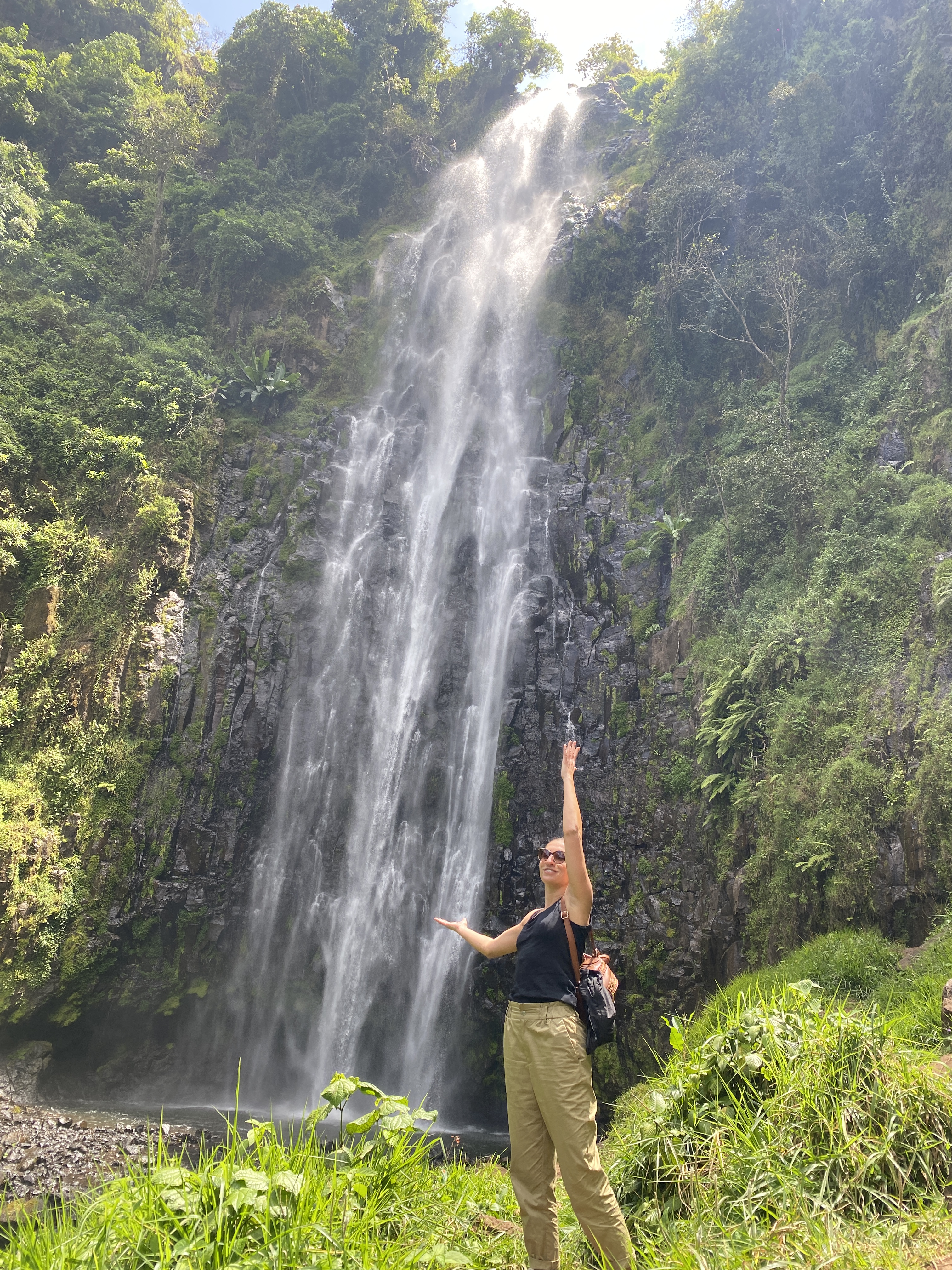
It never even crossed my mind to enquire about coffee-related experiences while in country, until speaking to my fellow trekkers about the extra-curricular activities they had or were planning to undertake during this trip. That’s when I first heard of the Materuni Waterfall and surrounding coffee plantation.
Since my flight back home got postponed by a day, I had the perfect opportunity to explore – and I am so glad I did!
The Chagga Way of Life
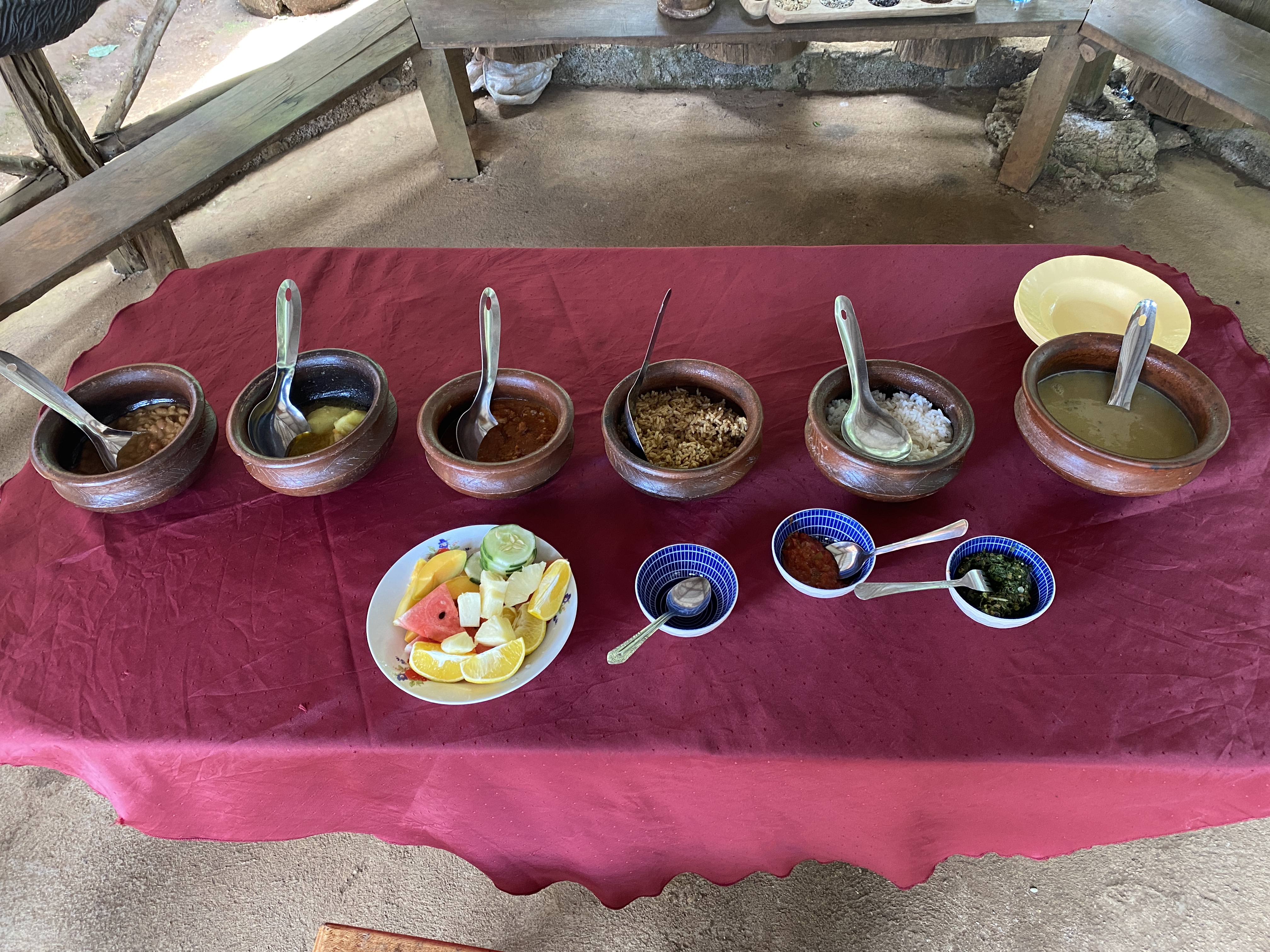
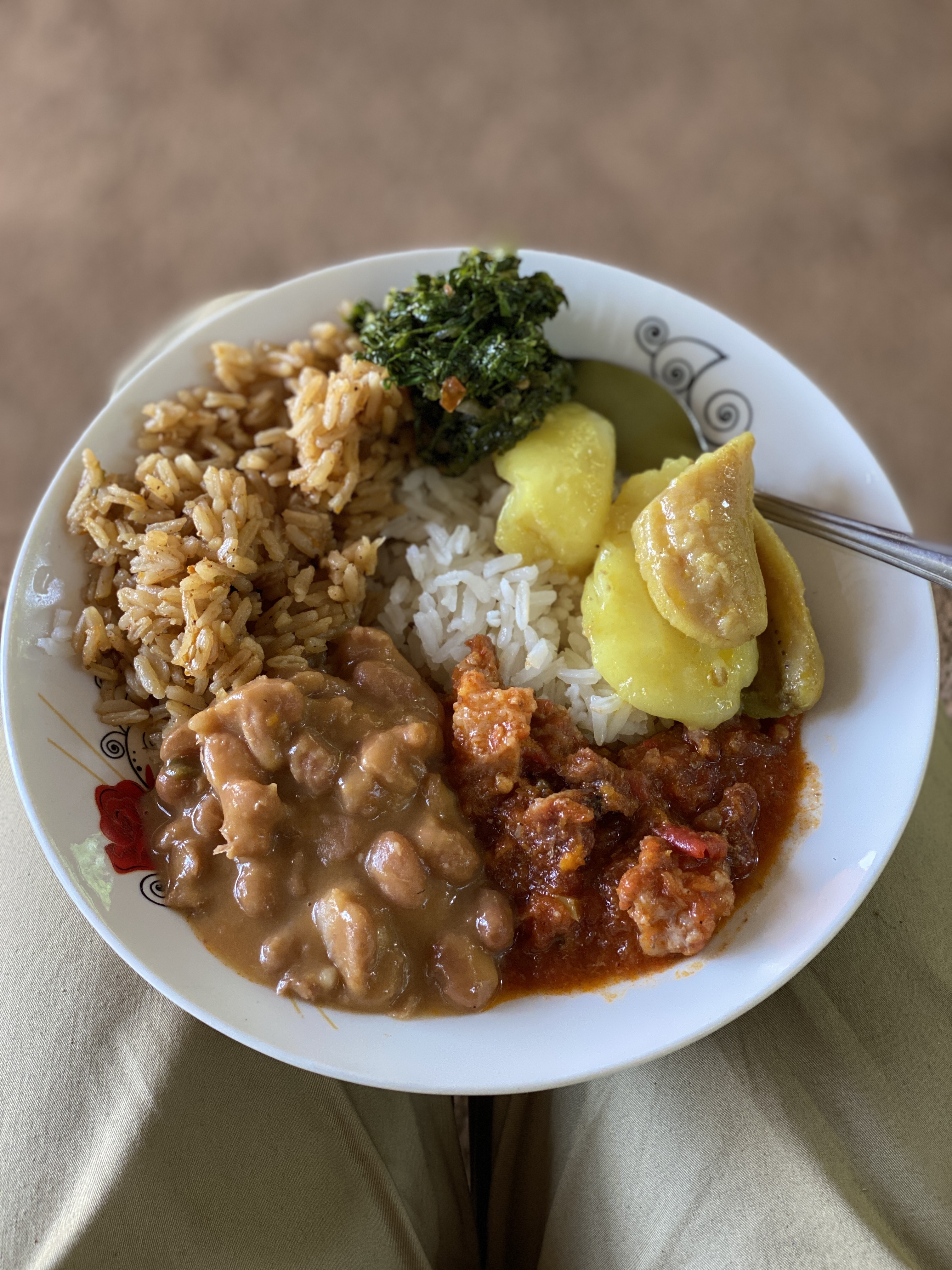
The adventure started near Moshi where I was dropped off with a guide at the Chagga Culture and Coffee Plantation. Following a short hike to and from the waterfall, my guide seemed to be taking me to someone’s home – clothes were drying on lines, there was the usual detritus in the yard, pigs and goats were making their noises in the barns, and I was also introduced to two ladies – a mother and daughter – preparing vegetables for dinner, and then the grandmother, conducting a symphony of pots and pans in a smoky kitchen. As it later turned out, they were cooking the same dinner I would enjoy later that day – this was the Chagga tribe hospitality.
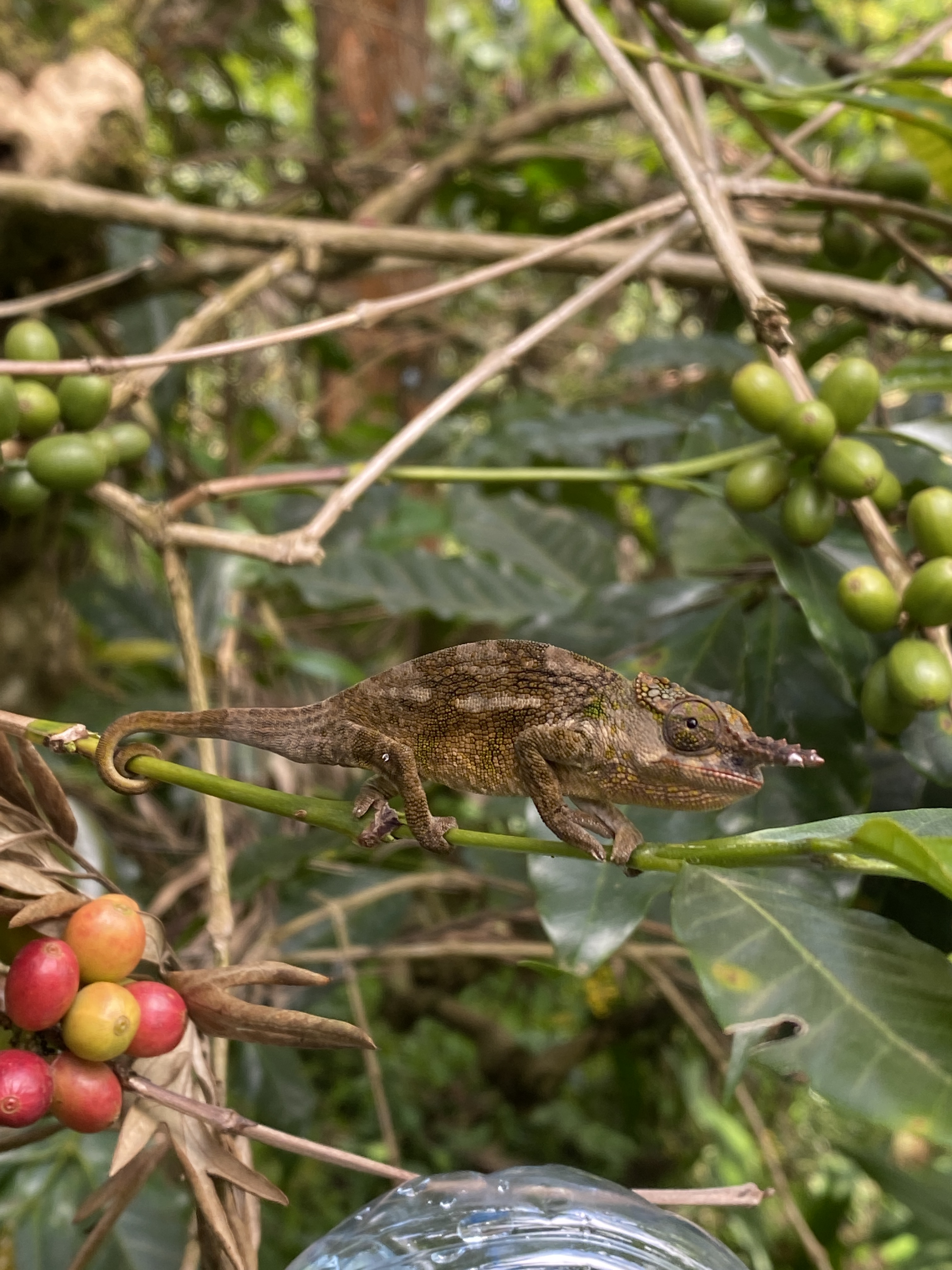
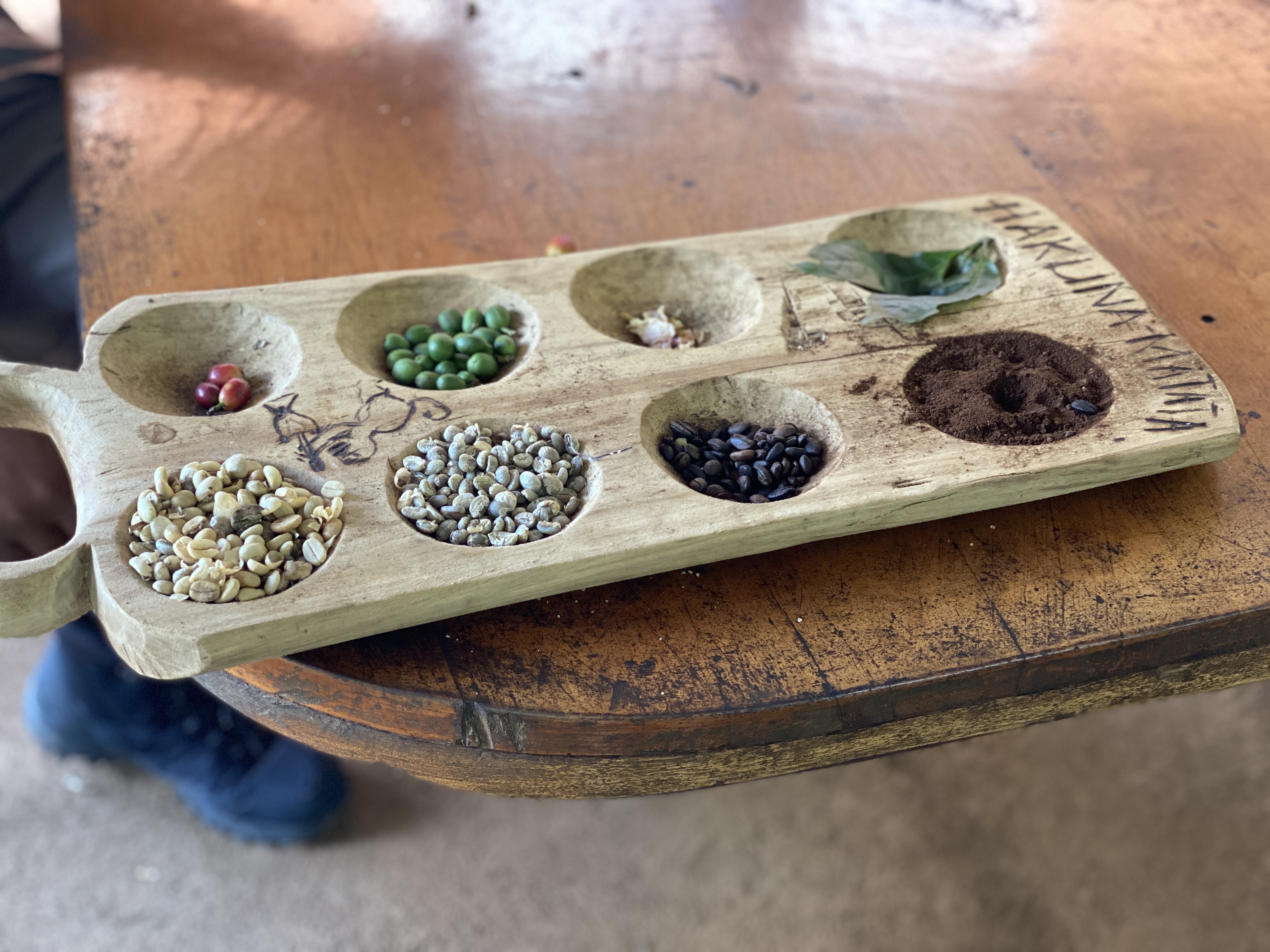
It’s from here that we walked through the plantation proper, picking a small basket of ripe red coffee cherries from their trees – blossoming under banana leaves, as it had been discovered that these two grow well together: the thirsty banana trees bring a lot of water to the surface for the coffee plants while also providing shade from the hot African sun.
We then took our ripe red cherries to a traditional hand grinder, where they lose their outer skin, leaving pale fruit in a bath of fresh water, which also identifies the good from the bad: the ones with no bean inside will float to the surface.
This bathing should take 3 days to dissolve the bitter outer layer on the fruit, before they are laid out to dry on large racks for 6-8 weeks. Naturally, we skipped this step and used already dried beans to continue my education.
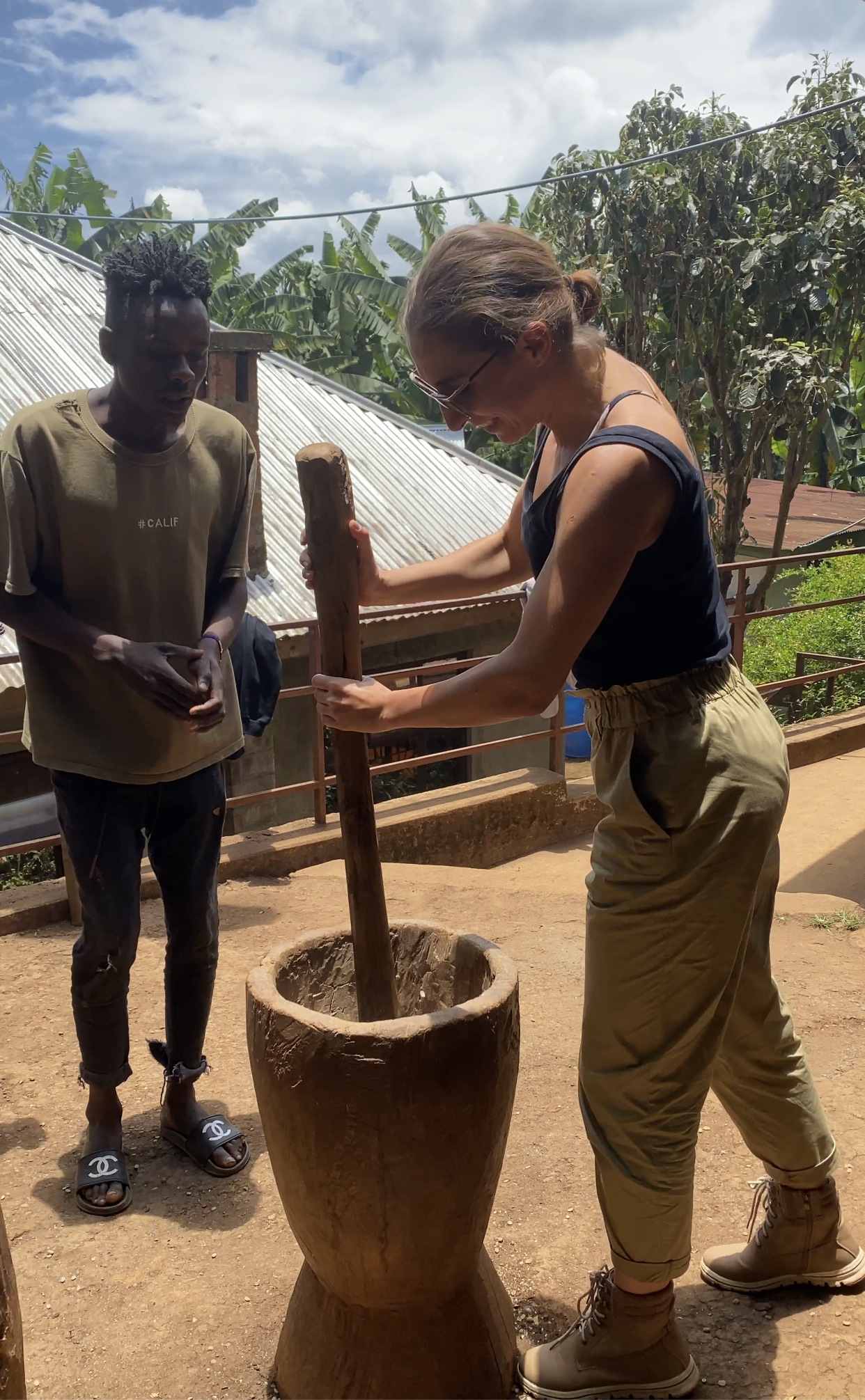
This is when the African culture kicks in – and even though I had spent over a week in the country by that point, I wasn’t prepared for what was to come.
The dried beans are poured into a life-sized wooden pestle and mortar where they get pounded to remove the dry husks and extract white seeds – all to the rythm of “Twanga” song, a Swahili word for “crushing” or “grinding”. At this point we were surrounded by other members of the guide’s family, taking turns in the process with the others clapping and singing, cheering the pounder along.
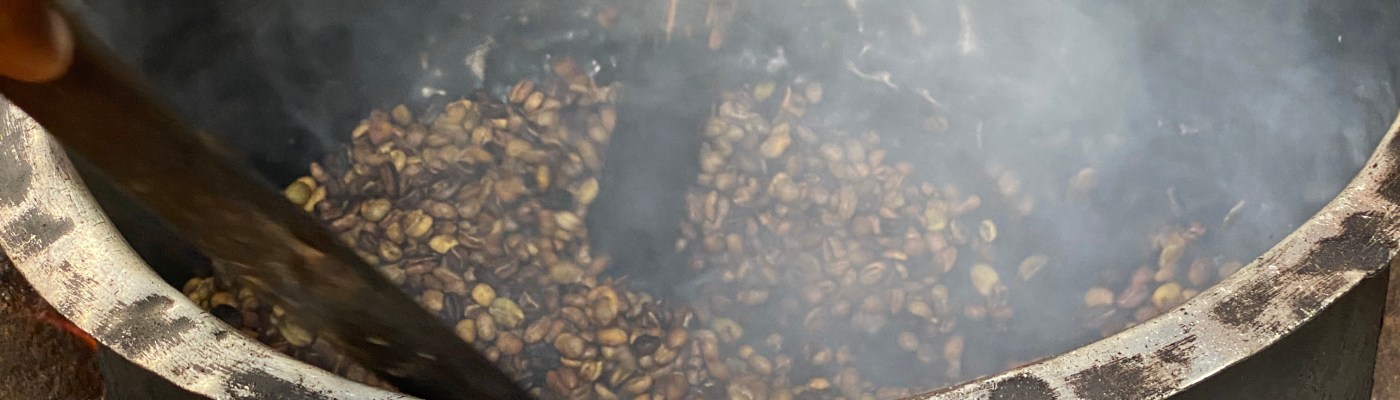
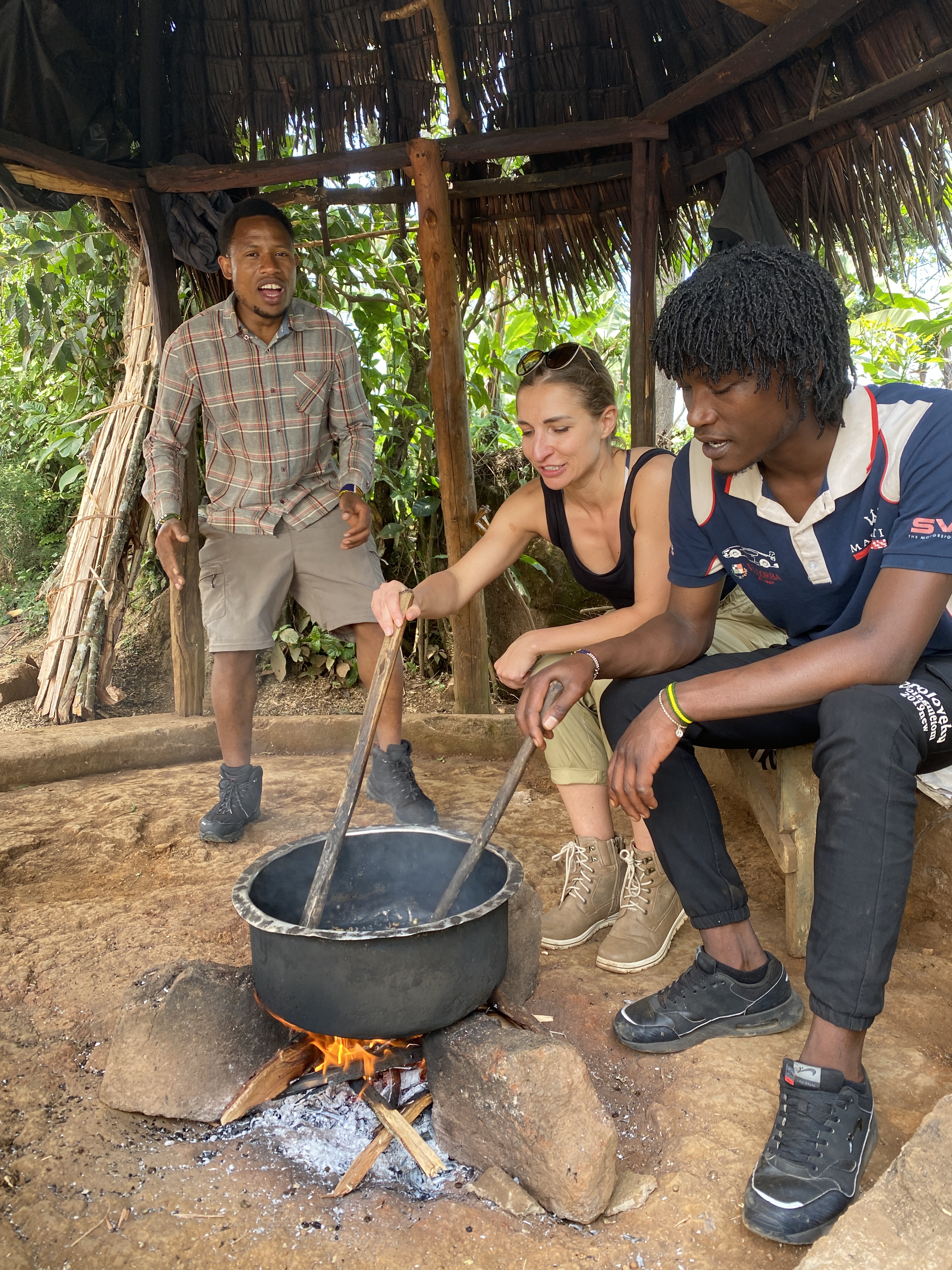
Next, shallow woven bowls are used for expertly sifting the husks away from the beans. The process moves to a sheltered seating area a few steps away, where a small fire is lit and a pot placed on top of it and the beans poured inside.
As singing and clapping continues, the beans have to be stirred constantly – an opportunity to literally have a hand in the roasting process. The smell is divine.
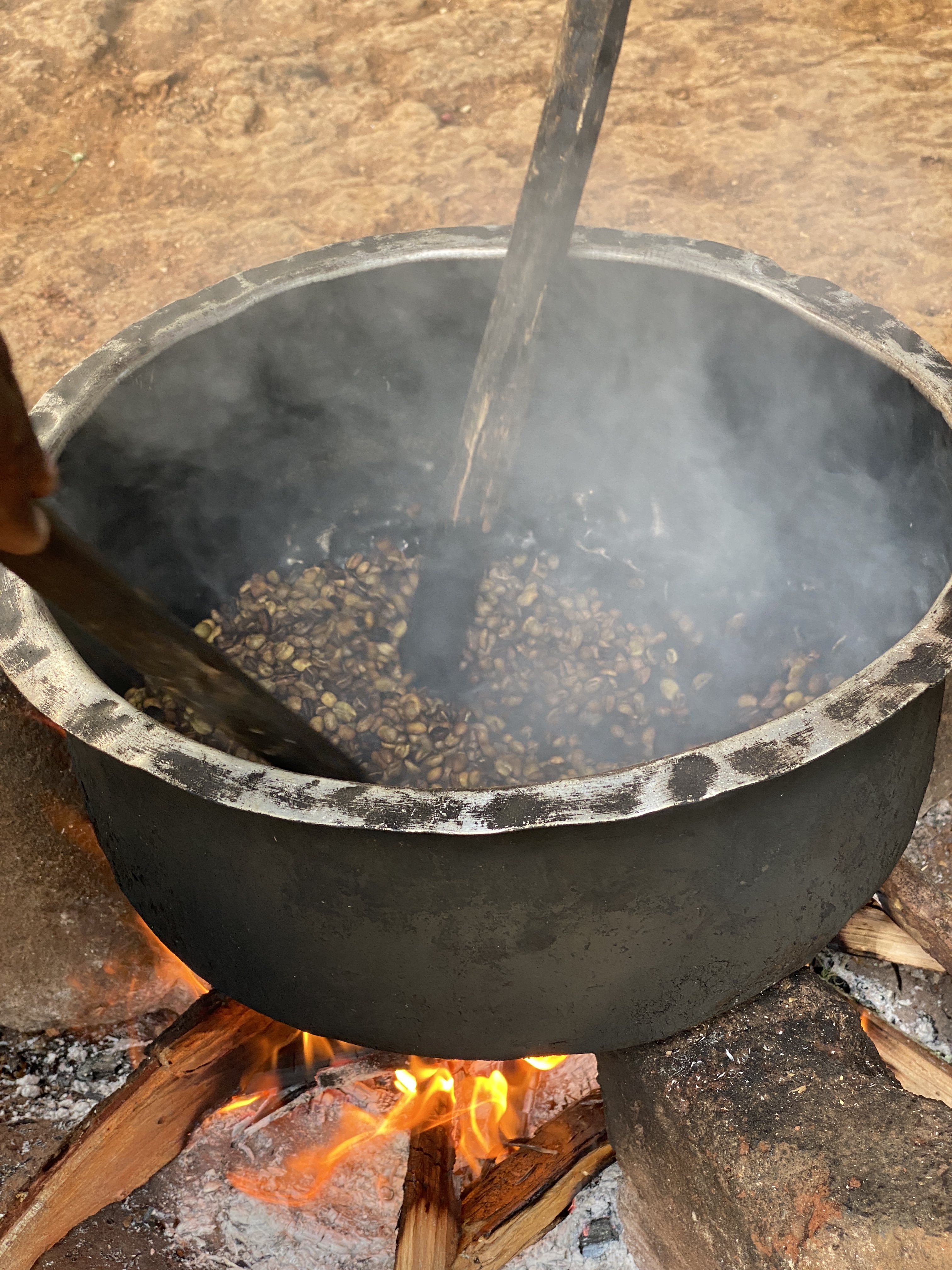
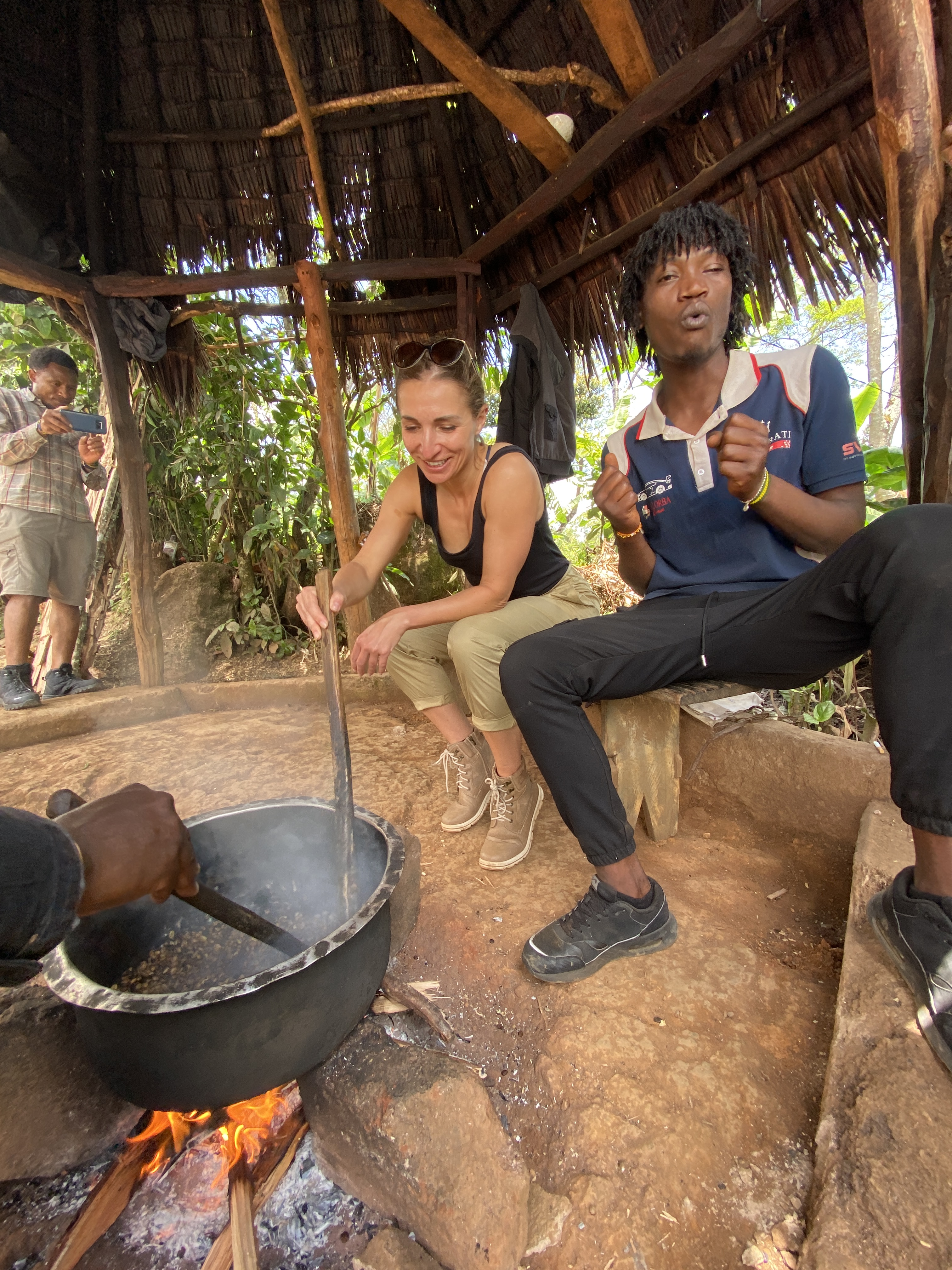

After around 7-8 minutes, the now dark beans go back to the woven bowl to separate them from any impurities from the pot; and then they return to the mortar to be ground as a final step before brewing. As is the case with modern coffee making, the grind needs to suit the preparation method – so this step is quite lengthy and sure to build up a sweat as everyone gets to pound the giant pestle in the process.
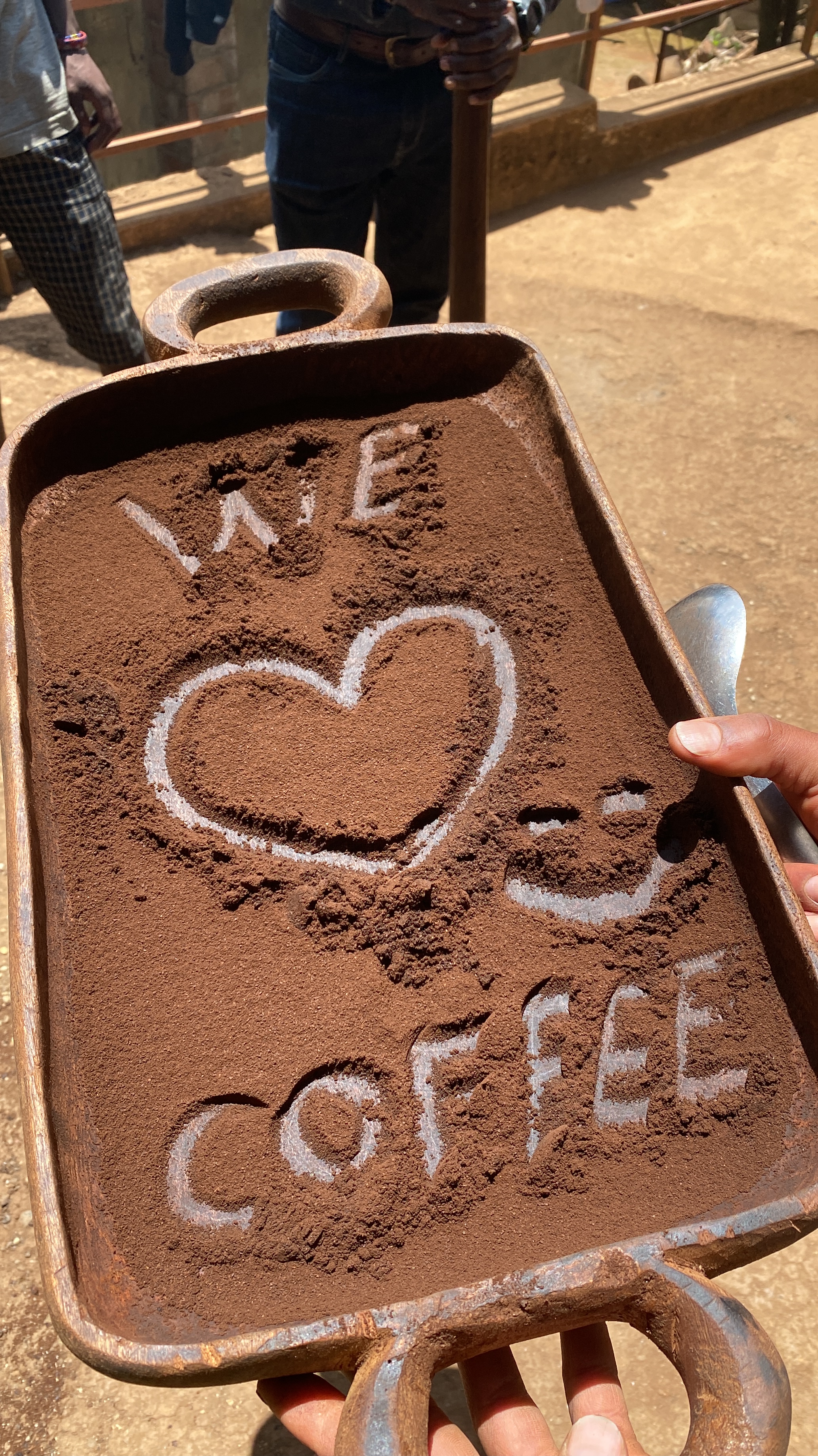
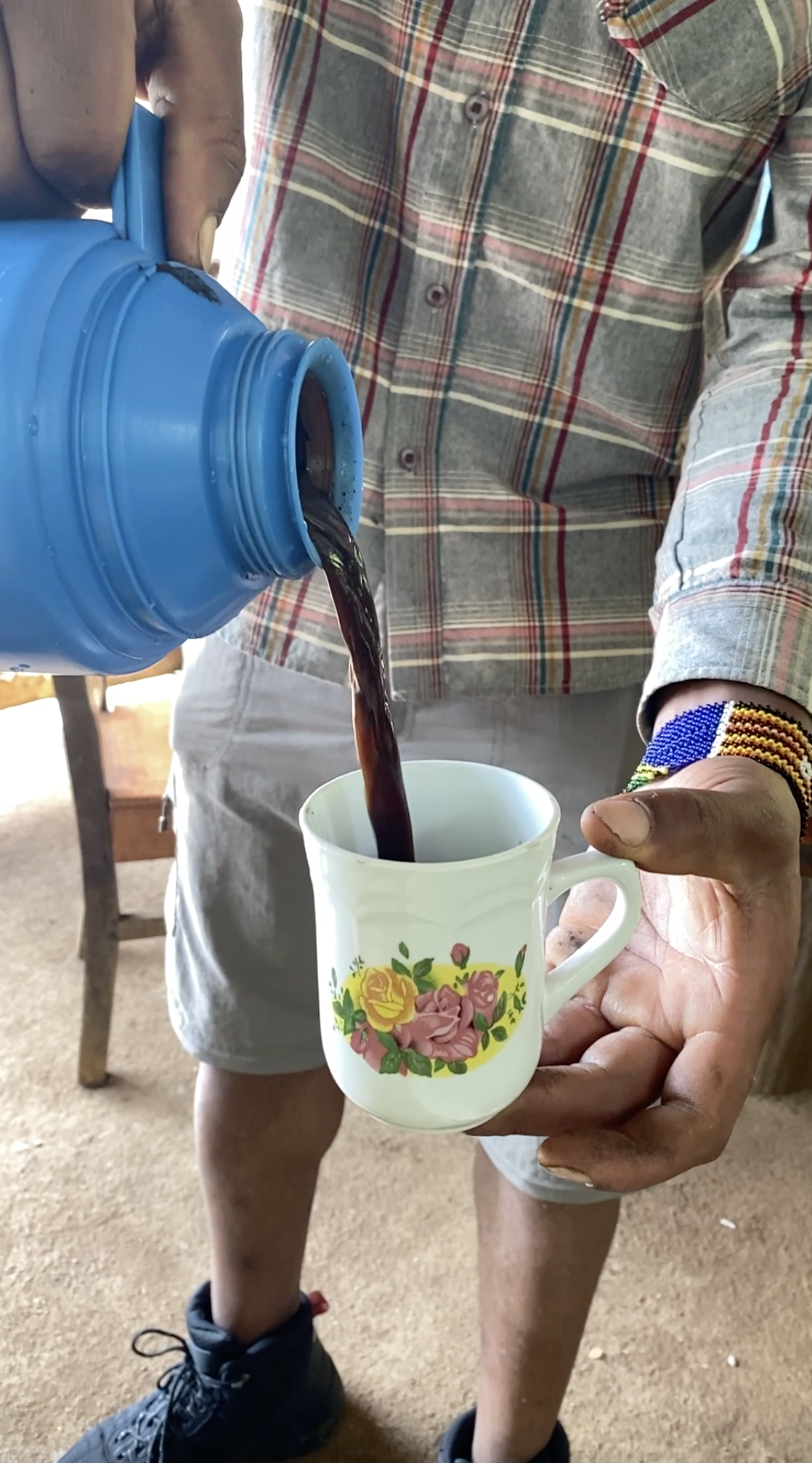
The fine powder at the end is sifted through a metal sieve and beautifully presented for a photo op before returning to the pot which has been boiling water in the meantime. The coffee is brewed for around 4-5 minutes before being poured into a thermos, from which it is then distributed among the visitors.
The Taste Test
All of this was a very fun touristy attraction, of course, and there was no doubt I would be drinking that coffee I had taken part in producing; but I was weary I might not like it nevertheless – after all, at that time I never took my coffee black, and there was no mention of milk at any point I was at the plantation. I wouldn’t dare to ask for it either, knowing it would spoil the true taste of the resulting brew.
You can imagine my surprise then, when I took the first sip – and loved it! To my tastebuds, the coffee was more like tea – a gentle warming brew, medium bodied, not overly lingering on the tongue and therefore inviting you to take another sip.
This was certainly not what I had expected, and I was soon finding myself getting a full top up, as well as purchasing a bag of colourfully packaged beans to take home with me. I continued to drink it without milk for weeks to come!
Intrigued, I decided to do a bit of research.
Tanzanian Coffee Profile
Tanzania is known for producing some of the finest coffee beans in the world, particularly Arabica coffee, which is renowned for its smooth, mild flavour and aromatic qualities.
Arabica beans thrive in high-altitude regions – like those of Tanzania – where they are cultivated with care and precision. However, there are still flavour differences to be expected within the country itself, depending on where the coffee is grown: from the slopes of Mount Kilimanjaro or Mount Meru, to the Southern Highlands, and the Mbeya region.
Tanzanian Arabica coffee is recognised for its complex flavour profile, which often includes notes of fruitiness, acidity and sometimes hints of wine or chocolate.
Coffee beans are typically processed using either the washed (wet) or natural (dry) method. The washed process involves removing the outer pulp from the coffee cherries before drying the beans – as was my experience with Chagga – resulting in a cleaner and brighter flavour profile.
In contrast, the natural process involves drying the whole coffee cherries before removing the pulp, which can impart fruity and fermented notes to the beans – that flavour I am not particularly fond of with broadly-perceived “African” coffee.
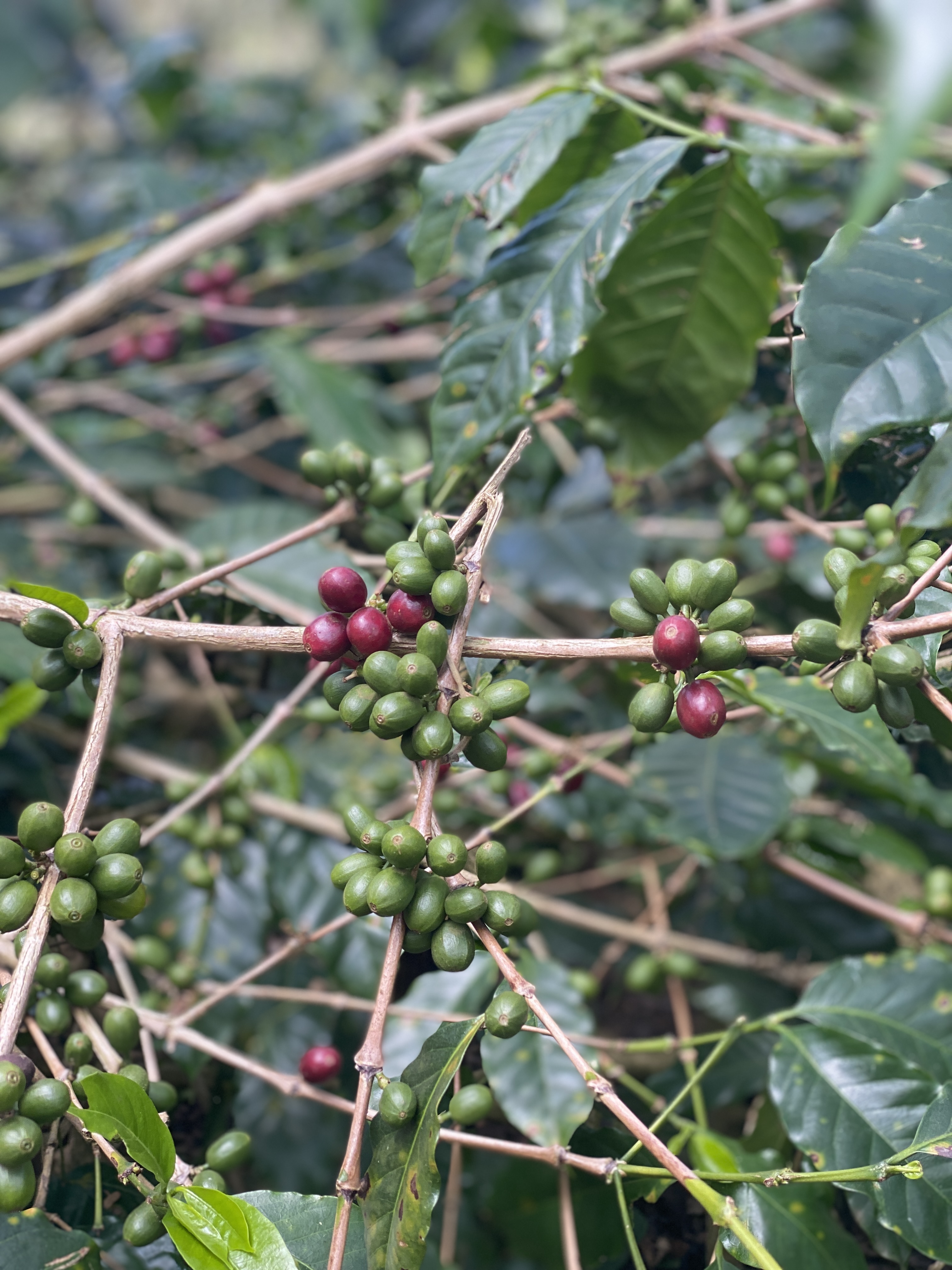
Food for thought?
As anything, labels are dangerous as they over-simplify often a complex concept. Through this experience I realised how misleading it is to put an all-encompassing description of “citrusy, fruity flavour” on coffee originating in Africa. Besides a life-altering experience of summiting the largest free-standing mountain in the world, Tanzania has opened my eyes (and tastebuds) to the exciting complexity of its coffee – and set me up for future discovery.
And it is important not to be overly dismissive of natural produce, cultivated with such passion and dedication as demonstrated by the Chagga tribe – because, to them, it is more than a job.
Coffee production is a significant contributor to Tanzania’s economy, providing employment opportunities for thousands of farmers and many other professions in communities serving the tourism sector.
The government and various organisations work to support coffee farmers through initiatives aimed at improving productivity, quality and sustainability practices; one big surprise to me was the ban on plastic bags entering the country (which have to be left on the plane).
Us as tourists can do our part by supporting those local communities directly – and, at minimum, keep our minds open to new experiences like this one. Who knows what you might learn as a result!
If you too are planning a trip to Tanzania and would like to roast, grind and brew your very own cup of coffee, check out Chagga Culture and Coffee’s website here.
 A Black Spot
One thought on “Tanzanian Coffee”