

My big trip of 2023 was Turkey, where across 10 days I visited 2 destinations: Istanbul and Cappadocia.
Known as the place where East meets West – or otherwise, the gateway between Europe and Asia, Istanbul is an explosion of sensory experiences when you first arrive. Its vibrant culture is a blend of Ottoman, Byzantine and modern influences, and you’ll see and feel that wandering the streets and exploring different districts.
Recognisable for some stunning architecture (hugely symbolic and dating back centuries) the city is also known for its bustling bazaars, lively street life, diverse cuisine – and teahouses… we’ll get back to that.
Cappadocia is also a toss between traditional and modern, but in a very different sense. Much quieter and calm by comparison, it is a destination for adventurous travellers ready to be enchanted by fairy chimneys (rock formations from volcanic activity), underground cities and cave hotels – or seeking the thrill of a hot-air balloon flight, which was the main reason I picked Turkey in the first place.
The peaceful Cappadocian air is only interrupted by the sound of ATVs (which you may know as quad bikes) as they set off in convoys through the various valleys and into the sunset for those Instagram-worthy holiday snaps.


Despite the different pace of life and over 700km of separation, one thing remains a staple of Turkish culture in both sites – and that’s the passion for the brew.
Let’s start with the more obvious one, shall we?
Turkish Coffee
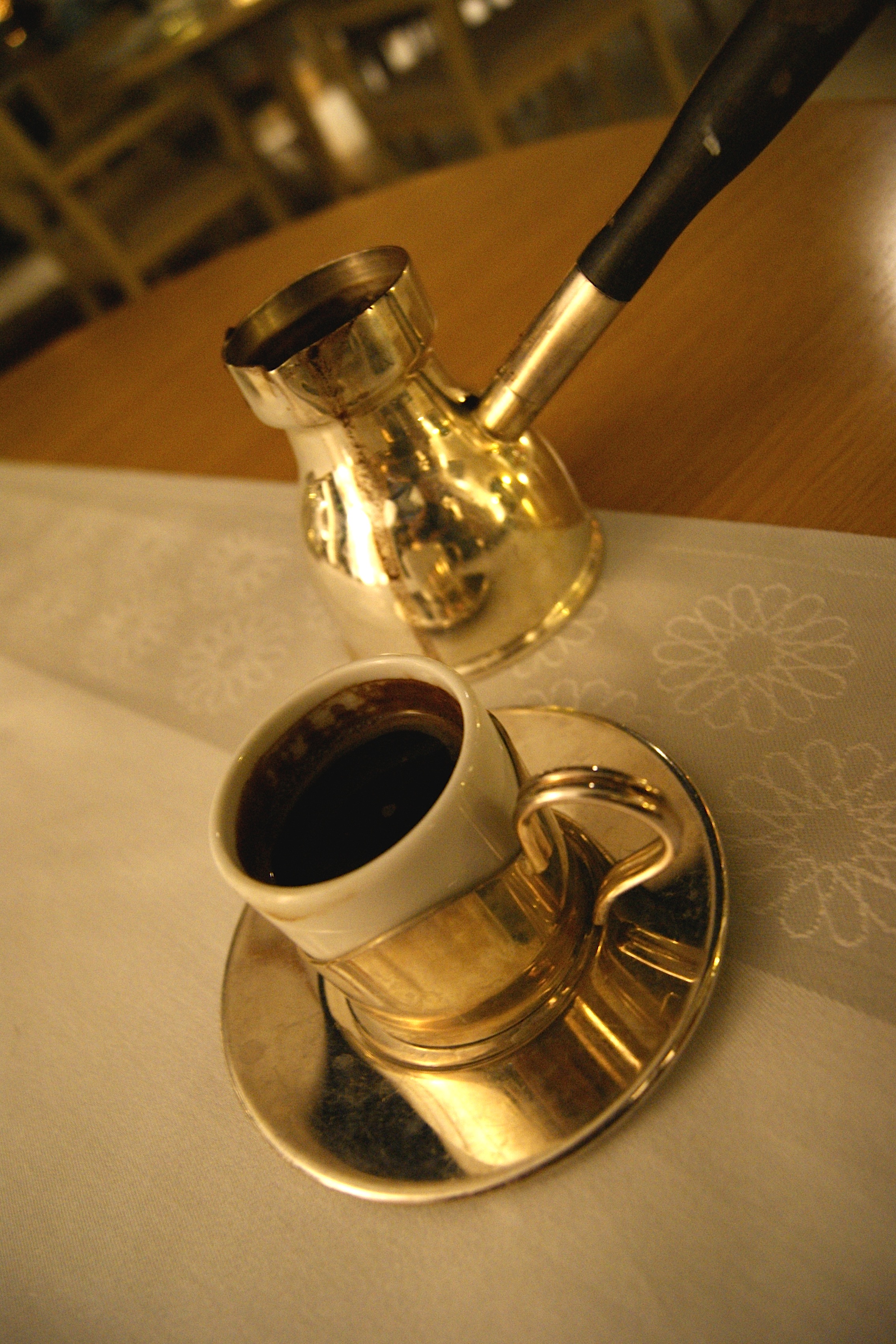
Traditional Turkish coffee is known for its unique preparation and strong flavor. It is made with finely ground coffee, water, and sugar* brewed together in a special pot called a cezve. The coffee is unfiltered, creating a thick and rich texture.
It’s often served in small cups, and the grounds settle at the bottom. Some say finishing the whole lot is part of the experience; I say the best part is before you start chewing on the grounds.
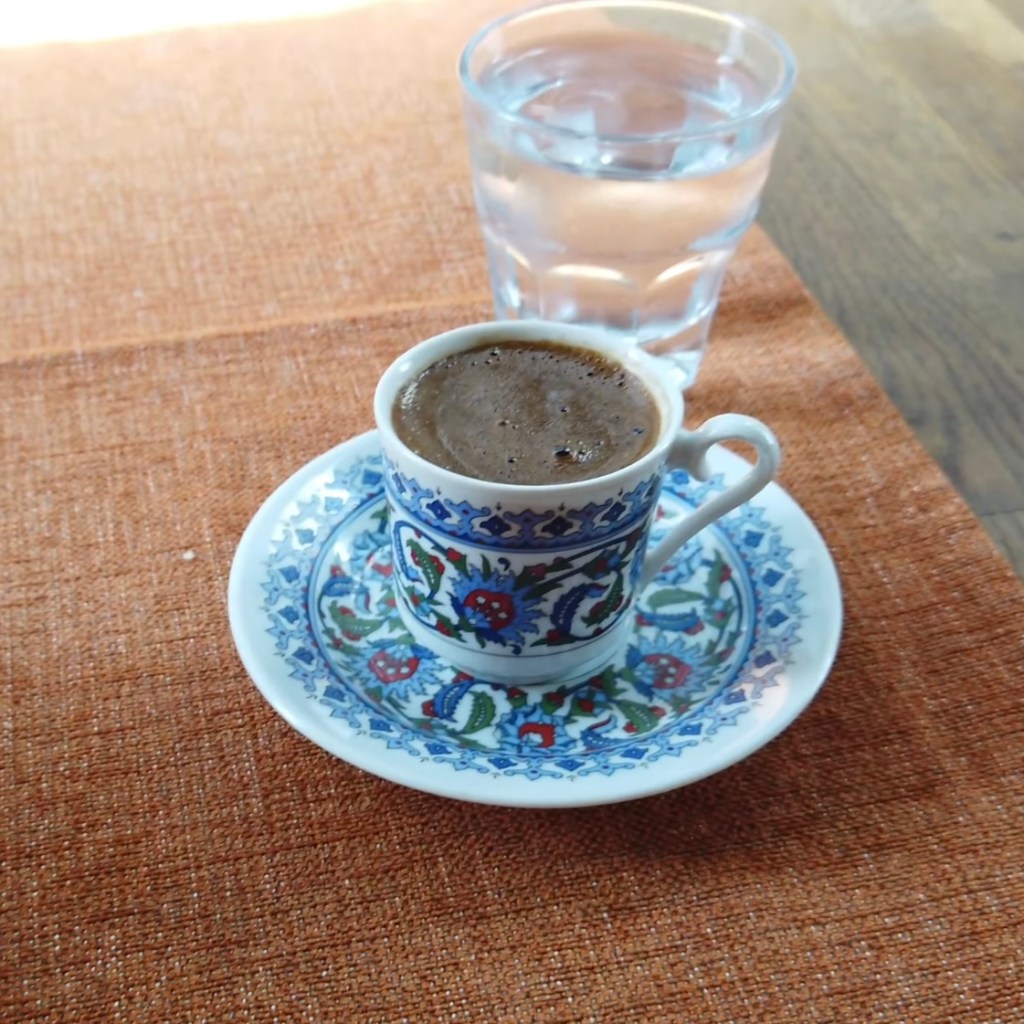
*While the sugar is optional, it is customary to take it sweet – especially if it’s you’re a first-timer.
This is because traditional Turkish coffee is made by heavily agitating it, often boiling multiple times to get more foam, which results in over-extraction and therefore high level of bitterness.
Sugar can help balance the brew’s intensity, making it more palatable for newbies – and, of course, anyone who prefers their brew on the sweeter side.
So, when ordering a Turkish coffee, you are most likely to be asked how sweet you want it, rather than how strong. To order unsweetened you would ask for “sade”, with a little bit of sugar “az”; a bit sweeter – “orta” and very sweet – “şekerli”.
The Origins
Turkish coffee has a rich history dating back to the 16th century, believed to have originated in the Ottoman Empire. The exact roots of how it came to Turkey are divided – some say it was was introduced to Istanbul by Syrian traders, other accounts claim it returned with the Ottomans after their invasion of Yemen – the birthplace of coffee – in 1517.
The very first public place serving coffee in the world is reported to be in Istanbul, by the name Kiva Han, translating loosely into “coffee house” in Turkish.
Unsurprisingly, the drink – and the venues that served them – grew in popularity and quickly became the hang out places for Turkish men. While women were not allowed to set foot in these establishments, they were very much entitled to partake in the brew – and so, their husbands were expected to provide a steady supply for the household. Failing to do so would give the woman a legitimate grounds for divorce!
The preparation and enjoyment of Turkish coffee became an integral part of Ottoman culture, eventually spreading to other regions. Today, it remains a symbol of hospitality and is an essential element of social gatherings in Turkey.
And yet, it wasn’t Turkey where I first experienced this brew, but in fact Abu Dhabi, as covered in this post. The look and taste of it also reminded me of my trip to Athens.
Indeed, Turkish coffee is similar to other forms of unfiltered coffee, such as Greek coffee and Arabic coffee. These varieties share the characteristic of being finely ground and brewed without filtration, resulting in a strong, robust flavor and a distinctive sediment at the bottom of the cup.
However, each region has its unique preparation methods, variations in the coffee-to-water ratio, and often specific rituals associated with the serving and drinking of these coffees. Scroll to the bottom for a step-by-step to how to make the Turkish variety at home (you may need to acquire some tools first)
Turkish Tea
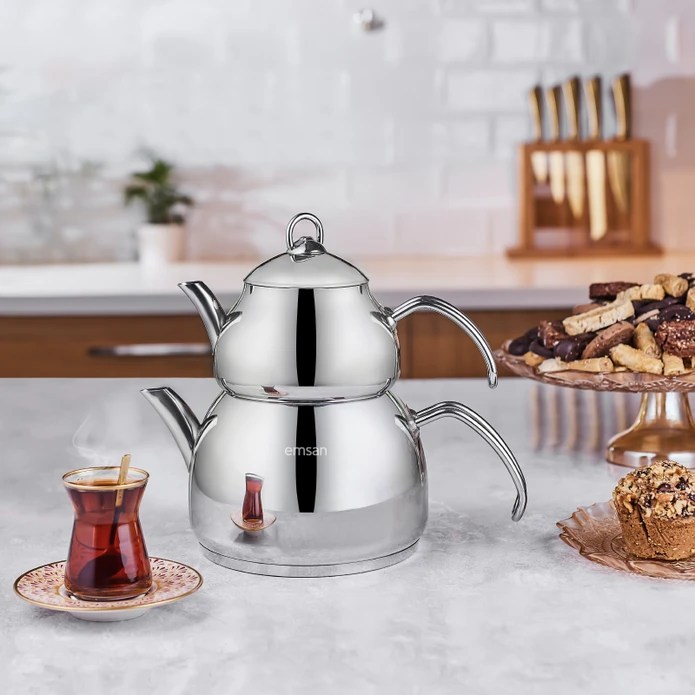
Also a quintessential and widely consumed drink in Turkey, tea is typically black, strong and served in small tulip-shaped glasses. Like coffee, it is an integral part of Turkish culture and social life, often enjoyed throughout the day; and – you guessed it – commonly served with sugar.
My experience of enjoying a Turkish tea on a few occasions (besides taking me back to my childhood where black tea was the staple of Polish culture and hospitality) – was that the sugar was always served on the side to be added at leisure, rather than pre-mixed as was the case with coffee.
I got myself into a complete muddle during my first lunch in the Turkish capital, when I was blown away by the sweetness of the coffee – which I agreed to have “az” (little sweet), on the insistence of the server – to then feeling deprived when I tasted my bitter tea… and ending up spooning in half a sachet of the white stuff!
Thankfully, that was a one-off and black tea quickly became the thing to finish off a meal with as a palette cleanser – because one thing for sure, if you are looking for something stronger in Turkey, it is going to cost you!

The ritual of preparing and sharing tea is deeply ingrained in Turkish hospitality; this was no more clear than at the Great and Spice Baazars, where merchants were sharing silver platters of tea, known as tepsis – a photo-worthy sight in its own right.
Another notable aspect of Turkish tea is the preparation method. It is brewed using a two-chambered tea pot called a çaydanlık. Water is boiled in the lower chamber, while loose tea leaves are placed in the upper chamber. The brewed tea is then diluted with hot water from the lower chamber, allowing drinkers to adjust the strength to their liking.
I think it’s needless to say (since there has been no mention of it thus far) that neither of these two brews are served with milk…

Did someone say “dairy”?
Alas, Ayran is also one of Turkey’s traditional drinks. It is a refreshing beverage made from yogurt, water, and a pinch of salt. Typically served chilled, Ayran is a popular choice, especially during hot weather. The combination of yogurt and water provides a cooling effect, making it a widely enjoyed across Turkey.
Sadly, my first experience of Ayran was a bad one. I had not done my research before venturing to the supermarket to stock up for my Airbnb. I stood – rather tired after my travels – in front of the fridges with no English translation in sight and too weary to Google every label; so I picked a bottle of what looked like fresh milk.
Karma, you could say, but the following morning I tried to heat Ayran on the stove to add to my brew… after that, I continued to drink my coffee black for the rest of the trip.

The cultural impact
Due to its location, Istanbul is a hugely cosmopolitan metropolis and home to a mix of races and faiths. Still, the official religion is Islam, which does not allow alcohol consumption by its followers.
Knowing this, you can expect high alcohol prices, particularly for the imported goods; and so, the evening scene away from the pure touristy hubs looks somewhat different also.
For Europeans like myself, a hang out at a bar or restaurant terrace would most likely mean a glass of wine or a cocktail in hand accompanying the conversations. This is still the case in Turkey for non-Muslims, but rubbing shoulders next to them you’re likely to see tea drinkers. In the more relaxed establishments, they will also partake in a tavla – a game of backgammon, or smoking a hookah.
Scrolling back up to the section on Coffee Origins, you can see that despite the passing of centuries, not much has changed at the core of Turkish culture. Family and community are still central, and social gatherings revolve around the traditional brews, with the humble cup of coffee still playing centrepiece – and thanks to the Ottoman Empire, it’s an experience shared by many outside Turkey.
How to make Turkish coffee at home
Ingredients:
- Medium or dark-roast arabica beans – very finely ground. The grind needs to be finer than espresso; if you don’t have a grinder with a very fine setting, ideally you would buy your coffee beans where they can be ground after purchase for maximum freshness. Conveniently, the grind you’ll ask for is “Turkish grind”
- Water (room temperature or warm to reduce brewing time)
- Sugar (optional, to taste)
Equipment:
- Cezve (Turkish coffee pot – see image below)
- Demitasse cups
Steps:
- Measure water and coffee according to the number of servings you want – Turks don’t typically use measuring tools but go by the rule of thumb: a heaped tablespoon per cup of water.
- Add the coffee and sugar to the cezve and top with water. Stir well to combine the ingredients.
- Place the cezve on low heat. Allow the coffee to heat gradually – do not stir once it begins brewing!
- As it starts to foam and bubble, pour a small amount of the froth into each cup.
- Return the cezve to heat until the coffee starts to rise but avoid boiling.
- Pour the remaining coffee into the cups.
- Allow it to settle for a moment before serving.
Let me know how you got on! I never cracked the right technique during my visit to Istanbul – but I did enjoy trying!
 A Black Spot